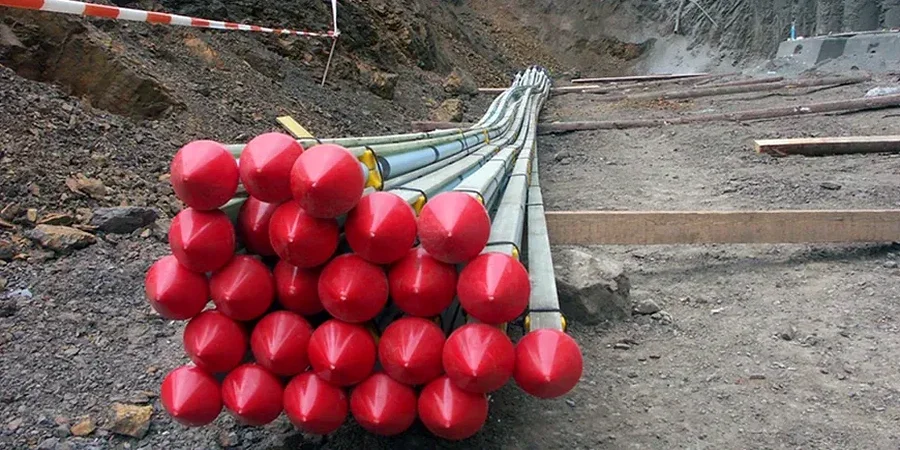
The geology across Laramie shifts noticeably from the sandy terraces near the Laramie River to the finer, wind-deposited silts up on the east bench. A retaining system that works with the river terrace gravels won't automatically suit the colluvial soils closer to the Snowy Range foothills. The anchor type—active or passive—and the grout-to-ground bond length both depend on that local stratigraphy. We design tieback anchors and rock bolts by interpreting site-specific subsurface data, so the load-transfer mechanism matches the soil or rock unit that's actually present on the parcel. Before committing to an excavation support scheme, many projects benefit from CPT testing to resolve thin silt seams that can dictate bond zone location, or a seismic refraction survey when bedrock depth is uncertain across the site.
An anchor is only as reliable as the soil it's bonded into—at 7,165 feet, frost depth and expansive clay seams control the design as much as the retaining load itself.
Questions and answers
What's the difference between active and passive anchors?
An active anchor is tensioned to its design load and locked off against the structure immediately after grouting. It carries load from day one. A passive anchor only develops resistance as the ground moves and loads the tendon—it doesn't apply a pre-load. Active anchors are standard for shoring walls where deflection control matters; passive anchors and soil nails work well for slope reinforcement where gradual load development is acceptable.
How deep into the Laramie soil does the bond zone need to go?
Bond zone depth depends on stratigraphy, not a fixed number. In the granular terrace deposits along the Laramie River, bond lengths of 15 to 25 feet are typical. In weathered Casper Formation mudstone west of town, the bond may be shorter—10 to 20 feet—provided the rock socket is properly cleaned and grouted. We always set the top of the bond zone below the local frost depth, which in Albany County is at least 4 feet.
How much does an anchor design package cost for a typical Laramie project?
For a building excavation or retaining wall in Laramie, the design package—including anchor type selection, bond length calculations, tendon specifications, and proof test criteria—typically ranges from US$990 to US$3,280. The exact cost depends on the number of anchor rows, wall height, and whether we're also providing construction-phase lift-off testing and field verification.
Which building code governs anchor design in Wyoming?
Anchor design in Wyoming falls under the IBC, specifically Chapter 18 for soils and foundations, with load combinations per ASCE 7-22. For prestressed ground anchors, we follow PTI DC35.1, which is the industry standard for tendon selection, corrosion protection, stressing procedures, and testing. OSHA 1926 Subpart P also applies to any excavation deeper than 5 feet where workers are present.