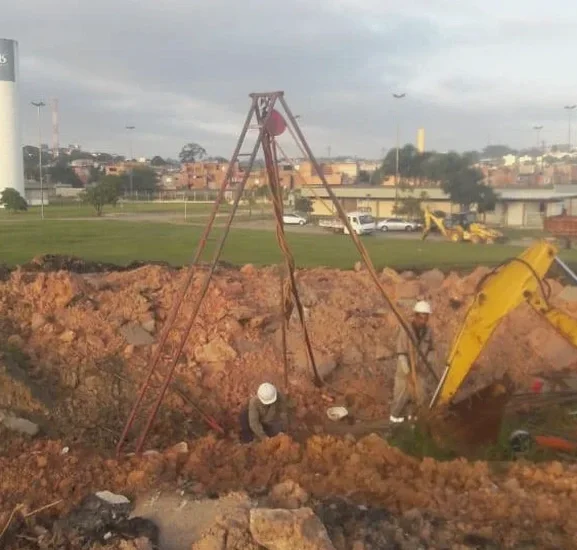
Between the West Side neighborhoods near the University of Wyoming and the developing subdivisions south of I-80, the soil in Laramie can shift from sandy loam to sticky clay in less than a quarter mile. That high-plasticity clay is what gets builders into trouble when they skip a basic Atterberg limits test. We run these tests to pin down the liquid limit and plastic limit of the fine fraction, which tells us straight up if the soil will swell when it gets wet or shrink when it dries out. At 7,200 feet of elevation, with freeze-thaw cycles eating at the ground every spring, ignoring the plasticity index means risking slab cracks or heaving footings within the first couple of winters. A well-run Atterberg limits test in Laramie gives the numbers that feed directly into foundation design, pavement sections, and retaining wall backfill specs.
A plasticity index above 25 in Laramie’s alluvial clays can mean the difference between a standard footing and a deep foundation system.
Applicable standards
ASTM D4318-17e1: Standard Test Methods for Liquid Limit, Plastic Limit, and Plasticity Index of Soils, ASTM D2487-17e1: Standard Practice for Classification of Soils for Engineering Purposes (Unified Soil Classification System), IBC Section 1803.5.3: Expansive Soils Investigation Requirements, ASCE 7-22: Minimum Design Loads and Associated Criteria for Buildings and Other Structures (indirect reference for expansive soil load effects)
Questions and answers
How much does an Atterberg limits test cost in Laramie?
A standard set of liquid limit and plastic limit tests (multi-point Casagrande cup method per ASTM D4318) typically runs between US$60 and US$100 per sample in our Laramie lab. If we are already running a full geotechnical investigation, the Atterberg limits are part of the index testing package and the unit cost per sample drops with volume. The exact price depends on how many samples you need and whether we are processing them as part of a larger project. For a single lot, one sample is usually enough to flag expansive clay risk, and that hundred bucks can save you thousands in foundation repairs down the road.
Why can’t I just use the visual-manual classification instead of running Atterberg limits?
Visual classification can tell you it’s a clay, but it cannot quantify the plasticity. Two clays that look identical in the hand can have plasticity indices that differ by 20 points, and that difference controls swell potential, shrink-swell cycles, and the allowable bearing pressure. The IBC requires Atterberg limits testing for expansive soil evaluation, and ASTM D2487 uses the plasticity chart to assign the final USCS group symbol. In Laramie’s variable geology, skipping the lab test is a gamble you don’t want to take.
How long does it take to get Atterberg limits results in Laramie?
Sample preparation and testing for a single set of Atterberg limits takes about one to two working days from the time the sample reaches our lab. The multi-point liquid limit determination requires several trials at different moisture contents, which adds time compared to a one-point test. If we are running it alongside grain size analysis and moisture content as part of a larger project, the complete index testing report is typically ready in three to four business days. Rush turnaround is available if your contractor is waiting on the data.