← Home · In-Situ Testing

Field Permeability Testing (Lefranc & Lugeon) in Laramie, WY

Together, we solve the challenges of tomorrow.

LEARN MORE →

The Laramie Basin sits atop the Casper Aquifer, a crucial water source formed within the saturated sandstones and limestones of the Casper Formation, while the surrounding surfaces are draped with Quaternary alluvium and weathered granite from the adjacent Medicine Bow Mountains. At an elevation of 7,200 feet, the freeze-thaw cycles here have fractured the shallow bedrock, creating preferential flow paths that often complicate standard geotechnical estimates. When designing infiltration basins or deep excavations, a simple grain-size correlation from an SPT drilling program won't capture the secondary porosity of this fractured media. That's precisely why we run in-situ field permeability tests—to measure the actual hydraulic conductivity of these discontinuous zones before construction assumptions become costly field changes.

In fractured granite typical of the Laramie Range, a Lugeon test often reveals conductivity values 10 to 100 times higher than what a lab permeability test on an intact core sample would suggest.

Methodology and scope

The hydrogeological contrast between downtown Laramie and the developing areas west of I-80 is stark. Near the University of Wyoming campus, you'll often encounter the Satanka Shale—a relatively impermeable unit where the Lefranc falling-head test works well for the overlying thin veneer of terrace gravels. Move just a few miles west toward the Sherman Granite outcrops, and the Lugeon test becomes indispensable for measuring how water moves through tight fissure networks under pressure. We frequently pair these direct permeability measurements with a resistivity survey to map the lateral continuity of water-bearing fractures before laying out the boring plan. The key is recognizing that a single packer test stage might show 0.5 Lu in competent rock, while the very next 10-foot run in a sheared contact zone could exceed 15 Lu—a variance you'll never catch through indirect methods alone.
Field Permeability Testing (Lefranc & Lugeon) in Laramie, WY
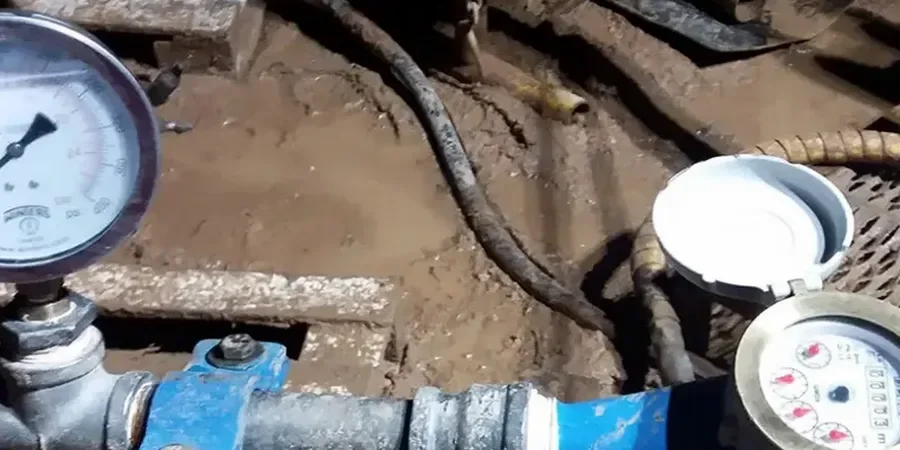
Technical reference image — Laramie

Local geotechnical context

One recurring issue we observe in Laramie's alluvial terraces is the misinterpretation of a constant-head test when the water table is perched above a low-permeability shale lens. A contractor might drill through a dry gravel layer, set a slotted casing, and assume the static water level is deep—only to hit a pressurized artesian zone lower down that blows out the borehole sidewalls. If you're planning a basement or a retaining structure, ignoring these confined aquifer conditions can lead to heave or complete floor slab failure during excavation. For deeper infrastructure, we recommend integrating the permeability profile with a grouting program to seal off high-conductivity fractures, ensuring that dewatering efforts aren't fighting an endless recharge source from the Casper Aquifer.

Need a geotechnical assessment?

Reply within 24h.

Email: [email protected]

Typical values

ParameterTypical value
Test Standard (Lefranc)ASTM D6391 (Variable Head Method)
Test Standard (Lugeon)USBR Designation E-18 / Houlsby Method
Applicable Soil TypesAlluvial sands, gravels, fractured shale, granite
Typical Test Depth (Laramie Basin)15 to 80 ft below ground surface
Packer Type (Lugeon)Pneumatic single or double packer
Measurement UnitsLugeon units (Lu) or cm/sec (k)
Cyclic Pressure Steps5-step Houlsby method (Lugeon)

Related services

01

Lefranc Variable Head Tests

Ideal for granular alluvium and terrace deposits, this method uses a falling or rising head in a cased borehole to determine hydraulic conductivity without the need for high-pressure pumps.

02

Multi-Stage Lugeon Testing

Performed in bedrock with pneumatic packers to isolate specific fracture zones. We use the Houlsby five-cycle pressure method to distinguish between laminar flow, turbulent flow, and hydraulic fracturing in the Sherman Granite.

03

Dewatering Design Analysis

Translating permeability coefficients into practical pump rates and well spacing for open-cut projects, ensuring compliance with local groundwater discharge regulations and site safety requirements.

Applicable standards

ASTM D6391 (Field Permeability by Borehole Methods), USBR Earth Manual Part 2 (Lugeon Test Procedure), ASCE 7 (Minimum Design Loads—Dewatering & Earth Pressures)

Questions and answers

When is the Lugeon test preferred over the Lefranc test in Laramie?

The Lugeon test is the standard choice when you're drilling into the fractured crystalline bedrock of the Sherman Granite or the cemented Casper Sandstone, especially where core logging shows open joints. The Lefranc method is more appropriate for the unconsolidated alluvial soils found along the Laramie River floodplain, where the material is granular and doesn't require a packer to isolate the test interval.

How much does a field permeability test cost in the Laramie area?

Depending on the depth of the test interval and whether a single or double packer setup is required, a field permeability test program typically ranges from US$680 to US$1,120 per test zone, which includes mobilization, drilling setup, and data interpretation.

How long does it take to get permeability results on site?

A standard five-cycle Lugeon test in a single 10-foot run takes about 45 to 60 minutes to complete once the packer is set. For a Lefranc falling-head test in granular soils, the actual measurement may only take 15 to 20 minutes, though borehole stabilization in caving alluvium can add significant rig time.

Can you use field permeability data to design a stormwater infiltration basin?

Absolutely. The Casper Aquifer recharge zones are very sensitive to contamination potential, so the Wyoming DEQ often requires in-situ permeability data to verify that the basin bottom has sufficient drainage capacity and that the vadose zone is thick enough to treat the runoff before it reaches the groundwater.
Location and service area

We serve projects in Laramie and surrounding areas.

View larger map