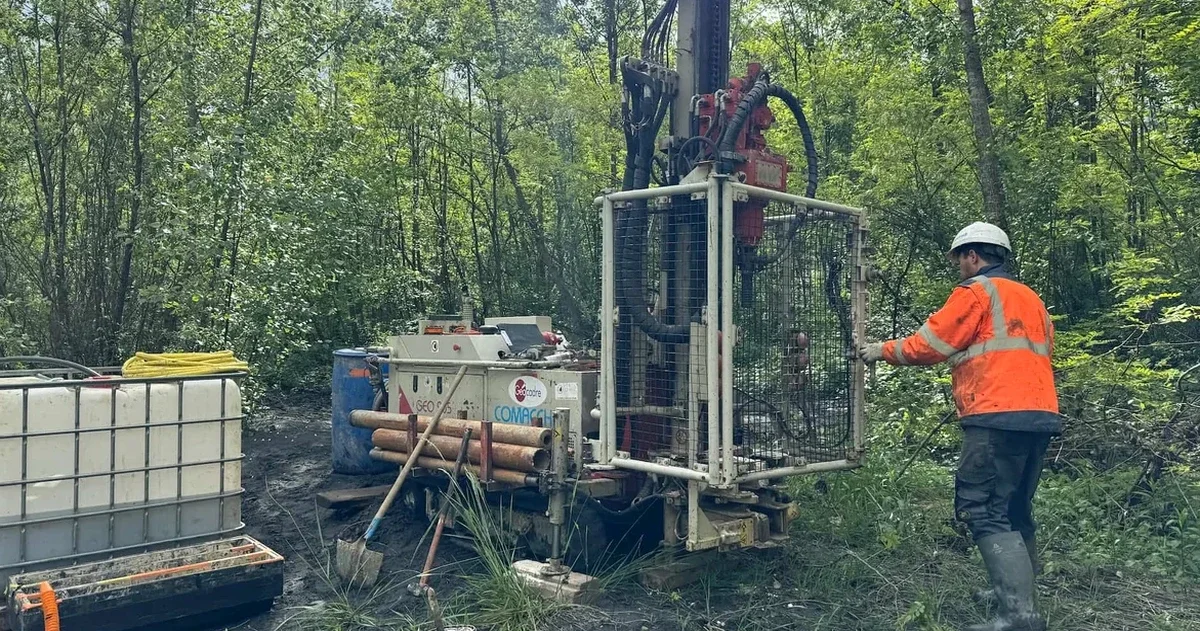
Laramie sits at 7,200 feet above sea level. That altitude shapes everything about the local ground. We deal with decomposed granite, wind-blown silt, and shallow bedrock all within the same block. A standard soil mechanics study here has to account for freeze-thaw cycles that go three feet deep. It has to handle the expansive clays in the Laramie Basin. On the University of Wyoming campus alone, we have logged more than 40 borings where the water table surprised the design team. That is the kind of local pattern you only learn by doing the work. For deeper stratigraphy checks we often combine this analysis with SPT drilling to get N-values and undisturbed samples in the same run.
Thin layers of expansive clay in the Laramie Basin can generate swell pressures exceeding 20 kPa if not identified early.
Questions and answers
How much does a soil mechanics study cost for a residential lot in Laramie?
For a single-family residential lot in Laramie, the study typically ranges from US$3,410 to US$5,520. The final cost depends on the number of borings, the depth to bedrock, and how many lab tests are needed. A site on the east side near the Sherman granite outcrops usually requires fewer consolidation tests than a site in the basin with thicker clay layers.
What soil parameters does the Laramie building department require?
The City of Laramie reviews geotechnical reports against IBC Chapter 18. They expect at minimum a bearing capacity recommendation, a total settlement estimate, a differential settlement estimate, and the frost depth design value. If the site is on a slope steeper than 15 percent, they also ask for a slope stability statement.
Can you test soil for radon potential during the study?
We do not run radon testing in our soil mechanics lab. However, we can coordinate with a certified radon measurement contractor and time their sample collection with our drilling window. Albany County has mapped high radon potential in several subdivisions, so it is a practical add-on.
How long does the lab testing phase take after drilling?
Standard classification tests are ready in three to five business days. Consolidation and triaxial tests take longer because we have to saturate the specimen and run the load stages slowly. A full soil mechanics report for a Laramie commercial project typically leaves our office ten to twelve business days after the field work wraps up.